A great man is one who collects knowledge the way a bee collects honey and uses it to help people overcome the difficulties they endure - hunger, ignorance and disease!
- Nikola Tesla

Remember, remember always, that all of us, and you and I especially, are descended from immigrants and revolutionists.
- Franklin Roosevelt

While their territory has been devastated and their homes despoiled, the spirit of the Serbian people has not been broken.
- Woodrow Wilson

Gordon Bijelonić

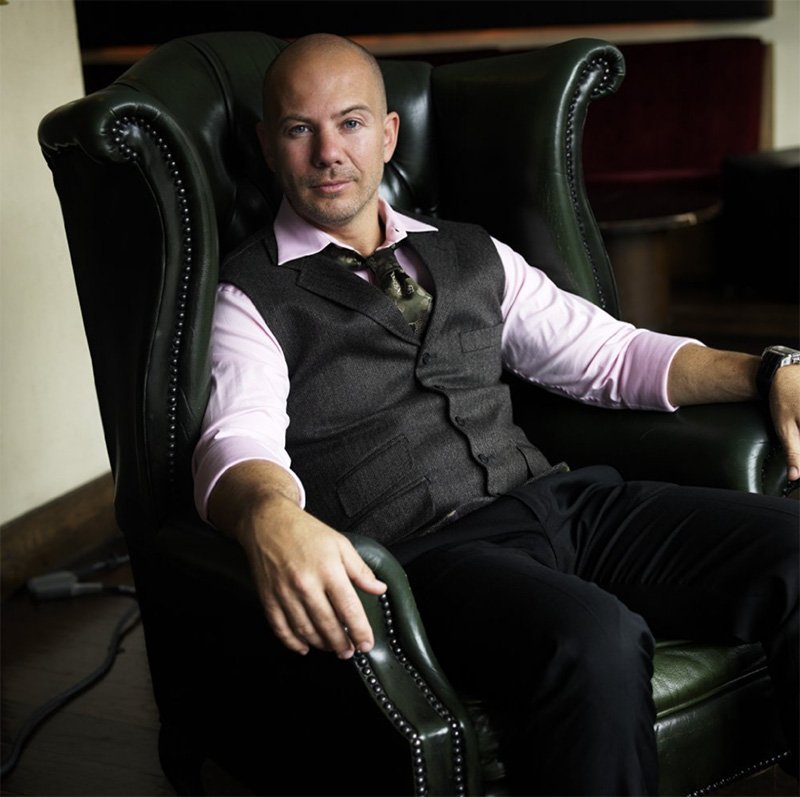
Gordon Bijelonić rođen je kao Goran u Nju Džersiju. Njegovi roditelji, porijeklom iz Bosne i Hercegovine, otišli su u Sjedinjene Američke Države 1969. godine. Počeli su od nule i naporno su radili kako bi njemu i njegovoj braći obezbijedili dobar život, na čemu im je Gordon veoma zahvalan. Preselio se u Los Anđeles 1997. godine, u Holivud, gdje je vodio Vinovu firmu 10 godina sa još jednim producentom.

Uradio je dva filma ‘Another happy day’ sa Demi Mur koji je dobio nagradu za najbolji scenario na festivalu ‘Sundance’, te ‘Salvation Boulevard’ sa Pierce Brosnanom.

Osim tih, Gordon je producirao filmove „Gun“ sa 50 Cent, „About cherry“ sa James Franco, “Freelancers” sa Robert De Niro, „Breakfast at Ben’s“, „It’s a Disaster“, a trenutno su u post produkciji „The angriest man in Brooklyn“ sa Robin Wiliams i Milom Kunis, te „Laggies“ sa Keirom Knightley.

U Holivudu, gdje živi, komšije su mu filmske zvijezde za koje kaže da su poput svih ostalih „običnih“ ljudi. Neki od njih su Brad Pitt, Johnny Depp, Denzel Washington, ali tu su i zvijezde iz svijeta muzike i sporta.

Osim producentskog rada, bavi se i humanitarnim, a često drži govore studentima na fakultetu „George Washington University“ u Vašingtonu. U saradnji sa Ambasadom Paname, u kojoj snima svoj prvi 3D film o Panamskom kanalu, pričao je sa oko stotinu djece iz ove države.

IMDb link


SA


People Directory

Katarina Miljković

Composer Katarina Miljkovic investigates interaction between science, music and nature through collaborative musical performance. This interest led her to the mathematician Benoit Mandelbrot's essay The Fractal Geometry of Nature and self-similar complex structures resulting in the cycle, Forest, “…a dreamy piece, along the lines of Feldman or Brown, entirely captivating (Signal to Noise). Her generative music has been described as a refined, hypnotic dream (Danas) a work of musical and visual slow-motion with only a few delicately elaborated musical metaphors (Radio Belgrade), "ambient tone poem... that moved hypnotically through the sonic frame" (Lucid Culture).

.
Read more ...

Publishing

Holy Emperor Constantine and the Edict of Milan

by Bishop Athanasius (Yevtich)

In 2013 Christian world celebrates 1700 years since the day when the Providence of God spoke through the holy Emperor Constantine and freedom was given to the Christian faith. Commemorating the 1700 years since the Edict of Milan of 313, Sebastian Press of the Western American Diocese of the Serbian Orthodox Church published a book by Bishop Athanasius Yevtich, Holy Emperor Constantine and the Edict of Milan. The book has 72 pages and was translated by Popadija Aleksandra Petrovich. This excellent overview of the historical circumstances that lead to the conversion of the first Christian emperor and to the publication of a document that was called "Edict of Milan", was originally published in Serbian by the Brotherhood of St. Simeon the Myrrh-gusher, Vrnjci 2013. “The Edict of Milan” is calling on civil authorities everywhere to respect the right of believers to worship freely and to express their faith publicly.

The publication of this beautiful pocket-size, full-color, English-language book, has been compiled and designed by Bishop Athanasius Yevtich, a disciple of the great twentieth-century theologian Archimandrite Justin Popovich. Bishop Athanasius' thought combines adherence to the teachings of the Church Fathers with a vibrant faith, knowledge of history, and a profound experience of Christ in the Church.

In the conclusion of the book, the author states:"The era of St. Constantine and his mother St. Helena, marks the beginning of what history refers to as Roman, Christian Empire, which was named Byzantium only in recent times in the West. In fact, this was the conception of a Christian Europe. Christian Byzantine culture had a critical effect on Europe; Europe was its heir, and then consciously forgot it. Europe inherited many Byzantine treasures, but unfortunately, also robbed and plundered many others for its own treasuries and museums – not only during the Crusades, but during colonial rule in the Byzantine lands as well. We, the Orthodox Slavs, received a great heritage of the Orthodox Christian East from Byzantium. Primarily, Christ’s Gospel, His faith and His Church, and then, among other things, the Cyrillic alphabet, too."