A great man is one who collects knowledge the way a bee collects honey and uses it to help people overcome the difficulties they endure - hunger, ignorance and disease!
- Nikola Tesla

Remember, remember always, that all of us, and you and I especially, are descended from immigrants and revolutionists.
- Franklin Roosevelt

While their territory has been devastated and their homes despoiled, the spirit of the Serbian people has not been broken.
- Woodrow Wilson

The Belgrade Philharmonic Triumphs in Carnegie Hall

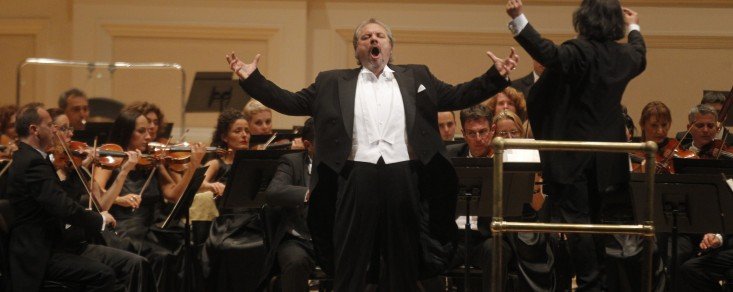
The audience rewarded the Belgrade Philharmonic Orchestra with several minutes of standing ovations for the final concert of its American tour, held in preeminent Carnegie Hall in New York. This historic concert marks the beginning of the new era of the orchestra’s international success.

In a concert hall that represents the artistic dream of any musician, the Belgrade Philharmonic was breathlessly listened to by more than 1500 people. Taking a firm step, the orchestra opened the grand finale of its first American tour with Tchaikovsky’s Slavonic March. The voice of Željko Lučić, who joined the Belgrade Philharmonic by courtesy of the Metropolitan Opera, raised a storm of delight in the audience. The unity and closeness felt in his appearance with the Belgrade Philharmonic brought them back on the stage for encore, in which they performed the aria Eri tu from Verdi’s Un ballo in maschera.

.

“We will become aware of the success achieved in New York tonight only when some time has gone by. Carnegie Hall inspires awe in all musicians around the world and to see a packed hall in front of you is purely amazing. This is the crown of the orchestra’s years of commitment and I hope we will soon repeat this success”, said concertmaster Miroslav Pavlović.

His fellow musician, also a concertmaster, Tijana Milošević continues: “As a student at the Juilliard, I already played in Carnegie Hall, but this is the first appearance here with my own orchestra. I am proud that we have represented Serbia so successfully.”

Sibelius’ Symphony No. 2 demonstrated the whole energy and grandeur of the Belgrade Philharmonic under the baton of Chief Conductor Muhai Tang. The music of Serbian composers Hristić and Binički, performed for encore, additionally enraptured the audience, who refused to let the orchestra off the stage with an applause that lasted several minutes. Eventually, the entire Carnegie Hall was on their feet as the Belgrade Philharmonic’s 96 musicians thankfully bowed to them.

Source: Belgrade Philharmonic Orchestra


SA


People Directory

Steve Tesich

Steve Tesich was an American Oscar-winning (1980) screenwriter, playwright and novelist.

Tesich was born on September 29th, 1942 as Stojan Tešić in Uzice, Yugoslavia (now Republic of Serbia) and emigrated to the USA with his family when he was 14 years old. They settled in East Chicago, Indiana, and Tesich later graduated from Indiana University in 1965, where he was a member of Phi Kappa Psi Fraternity..

Read more ...

Publishing

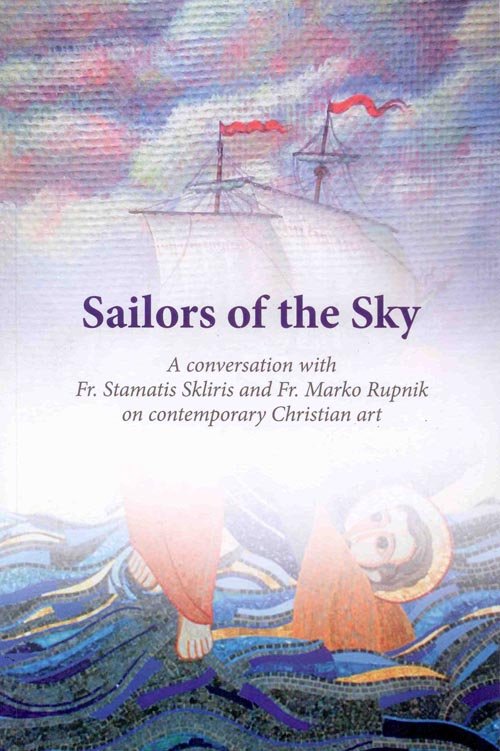
Sailors of the Sky

A conversation with Fr. Stamatis Skliris and Fr. Marko Rupnik on contemporary Christian art

In these timely conversations led by Fr. Radovan Bigovic, many issues are introduced that enable the contemporary reader to deepen and expand his or her understanding of the role of art in the life of the Church. Here we find answers to questions on the crisis of contemporary ecclesiastical art in West and East; the impact of Impressionism, Expressionism, Cubism, Surrealism and Abstract painting on contemporary ecclesiastical painting; and a consideration of the main distrinction between iconography and secular painting. The dialogue, while resolving some doubts about the difference between iconography, religious painting, and painting in general, reconciles the requirement to obey inconographic canons with the freedom essential to artistic creativity, demonstrating that obedience to the canons is not a threat to the vitatlity of iconography. Both artists illumine the role of prayer and ascetisicm in the art of iconography. They also mention curcial differences between iconography in the Orthodox Church and in Roman Catholicism. How important thse distinctions are when exploring the relationship between contemporary theology and art! In a time when postmodern "metaphysics' revitalizes every concept, these masters still believe that, to some extent, Post-Modernism adds to the revitatiztion of Christian art, stimulating questions about "artistic inspiration" and the essential asethetic categories of Christian painting. Their exceptionally wide, yet nonetheless deep, expertise assists their not-so-everday connections between theology, ar, and modern issues concerning society: "society" taken in its broader meaning as "civilization." Finally, the entire artistic project of Stamatis and Rupnik has important ecumenical implications that aswer a genuine longing for unity in the Christian word.

The text of this 94-page soft-bound book has been translated from the Serbian by Ivana Jakovljevic, Fr. Gregory Edwards, and Andrijana Krstic. Published by Sebastian Press, Western American Diocese of the Serbian Orthodox Church, Contemporary Christian Thought Series, number 7, First Edition, ISBN: 978-0-9719505-8-0