A great man is one who collects knowledge the way a bee collects honey and uses it to help people overcome the difficulties they endure - hunger, ignorance and disease!
- Nikola Tesla

Remember, remember always, that all of us, and you and I especially, are descended from immigrants and revolutionists.
- Franklin Roosevelt

While their territory has been devastated and their homes despoiled, the spirit of the Serbian people has not been broken.
- Woodrow Wilson

Serbian Church In History - Popular Uprising Against the Turks

Article Index

POPULAR UPRISING AGAINST THE TURKS

All patriarchs belonging to Sokolovic family tended to have correct relationships with Turks. However, although general living conditions were somewhat easier than at the beginning of Turkish occupation, Patriarch Jovan Kantul (1529-1613, John) changed this previously established attitude of his predecessors since both he and the people in general recognised the fact that the nation was still clearly enslaved. It was thought that nothing but freedom gained through a popular uprisings could set things to the right track again. This attitude prevailed by the end of the 16th century and continued to be in effect until freedom was gained three centuries later.

In 1594 an uprising of Serbs occurred in the region of Banat. Rebels carried flags bearing icons of St. Sava. A similar uprising broke out in the vicinity of Pec, and one occurred in Herzegovina in 1597. All of these were brutally put down by Turks and were ended in a terrible bloodbath. St. Theodore, Bishop of Vrsac and leader of Banat rebels, was skinned alive. As a measure of retaliation one of Turkish local rulers, Sinnan Basha, ordered relics of St. Sava to be burned in Beograd on April 27th/May 10th 1594. Patriarch Jovan Kantul also paid a heavy price — he was executed in Constantinople in 1613.

Patriarch Pajsije Janjevac (1614-1647, Paysiye Yanyevats) realized that open rebellion could not set things right. He turned for aid to Imperial Russia which had for a while already been a source of literary (service books) and some financial support. As the head of the Church he worked earnestly to strengthen the faltering spirit of the nation through constant celebration of Liturgy and by intense writing. He wrote the biography of the last Serbian emperor, Uros, and composed a Service to him. He also wrote the Service to St. Symon (King Stefan Prvovencani).

Patriarch Gavrilo I (1648-1655, Gabriel) also died a martyr’s death whilst in Turkish captivity.


SA


People Directory

Gojko Vuckovic

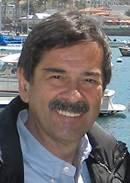
The longtime member and supporter of NASSS, Dr. Gojko Vuckovic(61) passed away on October 11, 2013 in Los Angeles, after a brief battle with gastric cancer. Dr. Vuckovic was buried at the Serbian Cemetery in Los Angeles, officiated by Father PetarJovanovic.

Dr. Vuckovic received his B.A. from the University of Belgrade. After arriving to the United States, he received a M.S.M.from the Arthur D. Little School of Management, Cambridge, Massachusetts(1990) and a M.P.A. from Harvard University, Cambridge, Massachusetts (1991). Healso received his Ph.D. from the University of Southern California (USC), School of Public Administration, Los Angeles, California(1996) with a concentration in the areas of comparative politics and administration.

.
Read more ...

Publishing

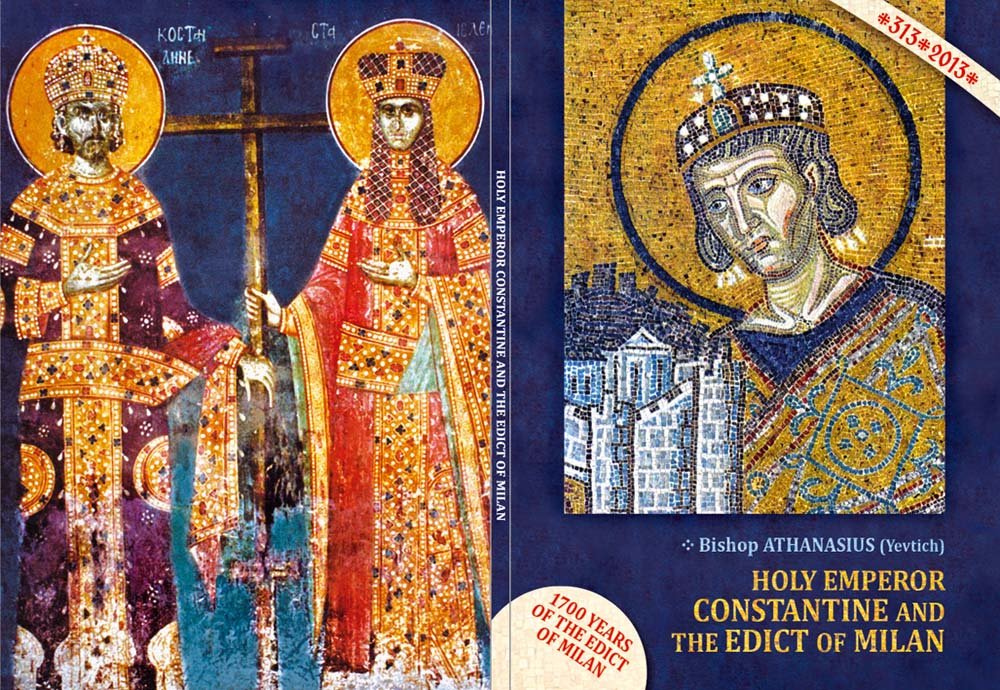
Holy Emperor Constantine and the Edict of Milan

by Bishop Athanasius (Yevtich)

In 2013 Christian world celebrates 1700 years since the day when the Providence of God spoke through the holy Emperor Constantine and freedom was given to the Christian faith. Commemorating the 1700 years since the Edict of Milan of 313, Sebastian Press of the Western American Diocese of the Serbian Orthodox Church published a book by Bishop Athanasius Yevtich, Holy Emperor Constantine and the Edict of Milan. The book has 72 pages and was translated by Popadija Aleksandra Petrovich. This excellent overview of the historical circumstances that lead to the conversion of the first Christian emperor and to the publication of a document that was called "Edict of Milan", was originally published in Serbian by the Brotherhood of St. Simeon the Myrrh-gusher, Vrnjci 2013. “The Edict of Milan” is calling on civil authorities everywhere to respect the right of believers to worship freely and to express their faith publicly.

The publication of this beautiful pocket-size, full-color, English-language book, has been compiled and designed by Bishop Athanasius Yevtich, a disciple of the great twentieth-century theologian Archimandrite Justin Popovich. Bishop Athanasius' thought combines adherence to the teachings of the Church Fathers with a vibrant faith, knowledge of history, and a profound experience of Christ in the Church.

In the conclusion of the book, the author states:"The era of St. Constantine and his mother St. Helena, marks the beginning of what history refers to as Roman, Christian Empire, which was named Byzantium only in recent times in the West. In fact, this was the conception of a Christian Europe. Christian Byzantine culture had a critical effect on Europe; Europe was its heir, and then consciously forgot it. Europe inherited many Byzantine treasures, but unfortunately, also robbed and plundered many others for its own treasuries and museums – not only during the Crusades, but during colonial rule in the Byzantine lands as well. We, the Orthodox Slavs, received a great heritage of the Orthodox Christian East from Byzantium. Primarily, Christ’s Gospel, His faith and His Church, and then, among other things, the Cyrillic alphabet, too."