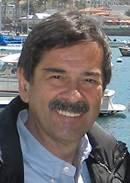
Dr. Vuckovic received his B.A. from the University of Belgrade. After arriving to the United States, he received a M.S.M.from the Arthur D. Little School of Management, Cambridge, Massachusetts(1990) and a M.P.A. from Harvard University, Cambridge, Massachusetts (1991). Healso received his Ph.D. from the University of Southern California (USC), School of Public Administration, Los Angeles, California(1996) with a concentration in the areas of comparative politics and administration.
.Upon arriving to the Unites States, Dr. Vuckovic worked on scholarship related to the peace, stabilization and development of Southeast Europe, with particular emphasis on the integration of countries of the former Yugoslavia into the international community and more recently on public education. He was an Affiliated Scholar with the Center for Multiethnic and Transnational Studies (1994-1998), researching the role of domestic and international forces in ethnic conflict management, with particular attention paid to the United Nations, the World Bank and the European Union. He also served as a Visiting Scholar at the Center for International Studies, University of Southern California, Los Angeles (1998-2001), conducting research on governance, capacity building and civil society in transition.For the past twelve years, (2001-2013), Dr. Vuckovic workedas a Senior Research Analyst with the Los Angeles Unified School District (LAUSD) on researching and evaluating various educational projects, including Proposition 227, a state ballot initiative requiring that all public school children in California be taught in English. Among other things, Dr. Vuckovic also served as a Director of the Leadership Projectof the LAUSD Leadership Academy.
Dr. Vuckovic was honored with the Morris Abrams Award in International Relations and Peace in 1994. He was a fellow at the Institute for the Study of World Politics and United Nations Industrial Development Organization and served on the editorial board of the Journal of East-West Business.He extensively published and presented work at conferences, seminars and other public events.In addition to his book “Ethnic Cleavages and Conflict: The Sources of National Cohesion and Disintegration – The Case of Yugoslavia” (published by Ashgate, England in 1997). Dr. Vuckovic has also authored numerous scholarly papers and articles, conference and policy papers on topics of ethnic conflict management, governance, world affairs, leadership and education and extensively published, including in the magazines World Affairs and East European Quarterly.
Dr. Vuckovic was a member of the Center for European Studies of Harvard University (CES), the American Society for Public Administration (ASPA), the American Academy of Political and Social Science (AAPSS),the American Education Research Association (AERA) and the California Education Research Association (CERA).
Dr. Vuckovic is survived by his wife Ivana, sons Ivan and Milosh, sister in law, Gordana and father in law Vojin Ognjanovic, all of Los Angeles, as well as mother Zorka,brother Dr. Vladimir and the Vuckovic family of Belgrade, Serbia.
The Dr. Gojko Vuckovic Memorial Fund was established per his wishes to assist with the scholarly needs of the NASSS. Tax exempt contributions to the Dr. Gojko Vuckovic Memorial Fund are invited may be directed to: The Dr. Gojko Vuckovic Memorial Fund, c/o Serbian Studies and mailed to Ms. Sonja Kotlica, Treasurer of the NASSS, 1301 Delaware Avenue SW #N112, Washington, D.C., 20024.The purpose of this Memorial Fund is to assist with the scholarly needs of members, associates, and participants in the publications and conferences of the North American Society for Serbian Studies.
More: The Center for Multiethnic and Transnational Studies