A great man is one who collects knowledge the way a bee collects honey and uses it to help people overcome the difficulties they endure - hunger, ignorance and disease!
- Nikola Tesla

Remember, remember always, that all of us, and you and I especially, are descended from immigrants and revolutionists.
- Franklin Roosevelt

While their territory has been devastated and their homes despoiled, the spirit of the Serbian people has not been broken.
- Woodrow Wilson

Krinka Vidaković-Petrov

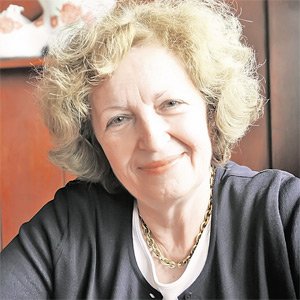
Dr. Krinka Vidaković-Petrov - scholar, professor, translator and diplomat. PhD in Comparative Literature. Currently senior fellow (full professor) at the Institute of Literature and Art in Belgrade. Fields of interest: comparative literature and folklore, Balkan and Serbian studies, emigrant culture, Hispanic and Judaic studies, literary translation, Holocaust studies. Author of several books and numerous contributions in academic journals in Serbia and abroad. Served as ambassador of Serbia in Israel (2001-2006).

Books:

  • Srbi u Americi i njihova periodika [Serbs in the USA and their Periodical Publications]
  • The Serb National Federation. First 100 Years 1901–2001 (ed)
  • Ogledi o usmenoj književnosti [Essays in Oral Literature]
  • Kultura španskih Jevreja na jugoslovenskom tlu [The Culture of the Spanish Jews in Yugoslavia]
  • Aspects de la culture des Juifs espagnols dans l'espace yougoslave XVI-XX siecles
  • Srbija i Španija. Književne veze [Serbia and Spain. Literary Links]
  • Kalmi Baruh: Selected Works on Sephardic and Other Jewish Topics (co-ed)
  • Književno prevođenje: teorija i istorija [Literary Translation: Theory and History] (ed)

SA


People Directory

Bishop Jovan (Mladenović)

(1994–2002)

The Divine provision brought the spiritual father of the Monastery Studenica, Bishop Jovan, to continue the work left by the equally most esteemed and humblest spiritual father of the Monastery Hilandar, Bishop Chrysostom.

As an accomplished monastic with the spiritual wealth he attained in the Studenica Monastery, he enriched his flock and clergy. Very soon he gained respect and confidence of his clergy and the faithful.

Bishop Jovan was born in 1950 of father Radojko and mother Stana Mladenović in the village of Dobrace, near Arilje, Serbia. He finished elementary school in his village. At the age of twelve, he went to the Klisura Monasteiy where he remained for one year and then went to the Studenica Monastery. He attended the monastic school in the Ostrog Monastery from 1967 until 1969. He was ordained a hierodeacon in the Studenica Monastery on April 25, 1971. He retained his baptized name of Jovan. Rt. Rev. Vasilije, Bishop of Žiča ordained him as hieromonk in 1973. He graduated from St. Sava Seminary in Belgrade in 1974 and from Theologcial College in Belgrade in 1980.

Read more ...

Publishing

Serbian Americans: History—Culture—Press

by Krinka Vidaković-Petrov, translated from Serbian by Milina Jovanović

Learned, lucid, and deeply perceptive, SERBIAN AMERICANS is an immensely rewarding and readable book, which will give historians invaluable new insights, and general readers exciting new ways to approach the history​ of Serbian printed media. Serbian immigration to the U.S. started dates from the first few decades of 19th c. The first papers were published in San Francisco starting in 1893. During the years of the most intense politicization of the Serbian American community, the Serbian printed media developed quickly with a growing number of daily, weekly, monthly and yearly publications. Newspapers were published in Serbian print shops, while the development of printing presses was a precondition for the growth of publishing in general. Among them were various kinds of books: classical Serbian literature, folksong collections, political pamphlets, works of the earliest Serbian American writers in America (poetry, prose and plays), first translations from English to Serbian, books about Serb immigrants, dictionaries, textbooks, primers, etc.

Read more ...