A great man is one who collects knowledge the way a bee collects honey and uses it to help people overcome the difficulties they endure - hunger, ignorance and disease!
- Nikola Tesla

Remember, remember always, that all of us, and you and I especially, are descended from immigrants and revolutionists.
- Franklin Roosevelt

While their territory has been devastated and their homes despoiled, the spirit of the Serbian people has not been broken.
- Woodrow Wilson

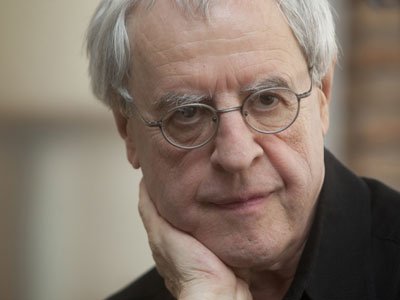
Charles Simic

Charles Simic (born May 9th, 1938) is an American poet. He was born in Belgrade, Yugoslavia (now Republic of Serbia), his childhood was very traumatic, as in the WWII Nazi and Allied bombers ravaged his homeland. Simic emigrated to the USA in 1953 to rejoin his father, who was living in New York City. They moved to Chicago shortly after his arrival. Simic first started to write poetry in high school, when he realized "that one of my friends was attracting the best-looking girls by writing them sappy love poems".

.

His first poems were published in 1959, when he was twenty-one. Simic was drafted into the army in 1961. In 1966, he graduated from New York University while working nights to pay for his tuition.

Since that time, Simic has written prolifically, producing over 60 books of published both in the US and abroad. In 1973, Simic moved to New Hampshire, where he is now a professor of English at the University of New Hampshire. He and his wife, Helenne, have two children, Anna and Phillipe. In 1990, Simic won the Pulitzer Prize for poetry for his collection The World Doesn't End: Prose Poems. He has also won awards for his works Walking the Black Cat and Classic Ballroom Dances. Simic was elected to The American Academy of Arts and Letters in 1995, which can be considered the highest formal recognition of artistic merit in the United States. Simic served as the Chancellor of the Academy of American Poets from 2000 until 2002.


SA


People Directory

Bishop Jovan (Mladenović)

(1994–2002)

The Divine provision brought the spiritual father of the Monastery Studenica, Bishop Jovan, to continue the work left by the equally most esteemed and humblest spiritual father of the Monastery Hilandar, Bishop Chrysostom.

As an accomplished monastic with the spiritual wealth he attained in the Studenica Monastery, he enriched his flock and clergy. Very soon he gained respect and confidence of his clergy and the faithful.

Bishop Jovan was born in 1950 of father Radojko and mother Stana Mladenović in the village of Dobrace, near Arilje, Serbia. He finished elementary school in his village. At the age of twelve, he went to the Klisura Monasteiy where he remained for one year and then went to the Studenica Monastery. He attended the monastic school in the Ostrog Monastery from 1967 until 1969. He was ordained a hierodeacon in the Studenica Monastery on April 25, 1971. He retained his baptized name of Jovan. Rt. Rev. Vasilije, Bishop of Žiča ordained him as hieromonk in 1973. He graduated from St. Sava Seminary in Belgrade in 1974 and from Theologcial College in Belgrade in 1980.

Read more ...

Publishing

Serbian Americans: History—Culture—Press

by Krinka Vidaković-Petrov, translated from Serbian by Milina Jovanović

Learned, lucid, and deeply perceptive, SERBIAN AMERICANS is an immensely rewarding and readable book, which will give historians invaluable new insights, and general readers exciting new ways to approach the history​ of Serbian printed media. Serbian immigration to the U.S. started dates from the first few decades of 19th c. The first papers were published in San Francisco starting in 1893. During the years of the most intense politicization of the Serbian American community, the Serbian printed media developed quickly with a growing number of daily, weekly, monthly and yearly publications. Newspapers were published in Serbian print shops, while the development of printing presses was a precondition for the growth of publishing in general. Among them were various kinds of books: classical Serbian literature, folksong collections, political pamphlets, works of the earliest Serbian American writers in America (poetry, prose and plays), first translations from English to Serbian, books about Serb immigrants, dictionaries, textbooks, primers, etc.

Read more ...