A great man is one who collects knowledge the way a bee collects honey and uses it to help people overcome the difficulties they endure - hunger, ignorance and disease!
- Nikola Tesla

Remember, remember always, that all of us, and you and I especially, are descended from immigrants and revolutionists.
- Franklin Roosevelt

While their territory has been devastated and their homes despoiled, the spirit of the Serbian people has not been broken.
- Woodrow Wilson

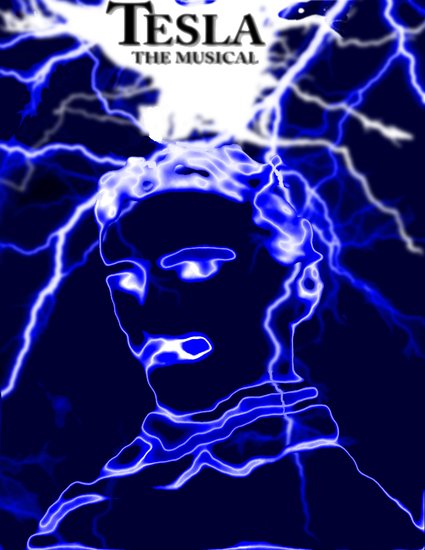
Tesla: The Musical

Tesla: The Musical is a full-length, all-original rock opera about the life, mind, and legacy of turn-of-the-century inventor Nikola Tesla.

On July 10th, 1856, a boy was born at midnight during a lightning storm in present-day Croatia. Twenty-eight years later, he would come to America with virtually nothing but his education and a mind unlike any other. He would change the world forever with alternating current – the form of electricity we use to this day. He would go toe-to-toe with Thomas Edison, one of the most powerful men on the planet, who did everything he could to get in his way. He would suffer from mental illness in a time before proper diagnosis and treatment were available. He would be admired by scores of women but would never marry or have children, as he feared they would distract him from his work. He would fail at just as many endeavors as he succeeded at. Because he took no royalties for his AC patents, ensuring that safe, cheap electricity would reach every corner of the globe, he would die broke, alone, and insane. After his death he would be largely forgotten as he left behind no companies or children.

His name was Nikola Tesla. This is his story – the man, the myth, the musical.

Interview: Tesla Musical in making: Teslians Aaron Guzzo and Miroslav Vejnovic about musical in making

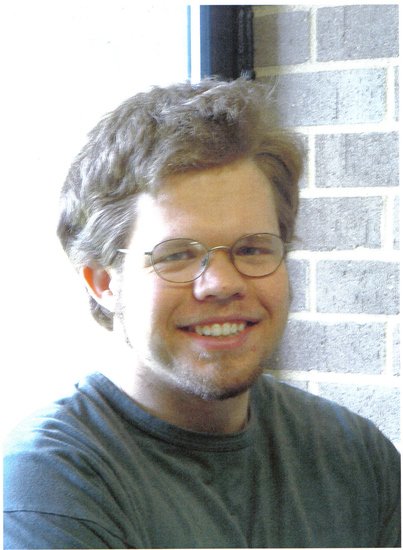
Production Team: Aaron Guzzo, composer, musical director, and screenwriter, and Craig Hissong, lyricist


SA


People Directory

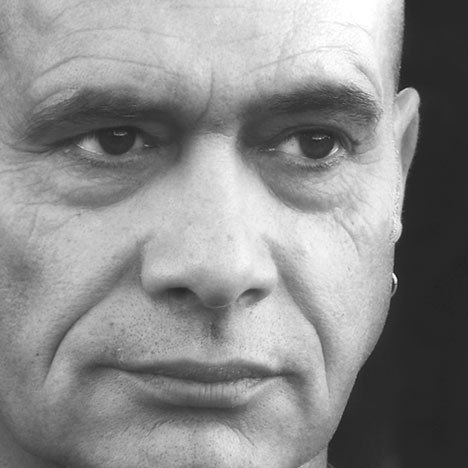
Richard Milanovich

Birth: Dec. 4, 1942, Banning, Riverside County, California, USA
Death: Mar. 12, 2012, Rancho Mirage, Riverside County, California, USA

Born to an Indian mother and Serbian father, Richard M. Milanovich grew up in poverty in Palm Springs, living in a shack and receiving government handouts of surplus food. He served as in infantryman in the United States Army from 1960-1963, and later returned to the Agua Caliente Band of Cahuilla Indians Reservation to engage in tribal politics. Eventually he was elected Chairman of the Band in 1984, and became a major figure in the development of casino operations on Indian land in the region and California. Through his vision and leadership, the Agua Caliente Band became the most prosperous group of Indians in the United States, and were able to make major contributions to the economy of the Palm Springs area. As Chairman, he was invited to the White House to consult with the President and other political officials. California Governor Jerry Brown, Congresswoman Mary Bono-Mack, Palm Springs Mayor Steve Pougnet, and Tribal Chairpersons from throughout California all eulogized Chairman Milanovich at the memorial service held in his honor held at the Palm Springs Convention Center. He was buried in a service attended by family and close friends.

Read more ...

Publishing

My Brother's Keeper

by Fr. Radovan Bigovic

Rare are the books of Orthodox Christian authors that deal with the subject of politics in a comprehensive way. It is taken for granted that politics has to do with the secularized (legal) protection of human rights (a reproduction of the philosophy of the Enlightenment), within the political system of so-called "representative democracy", which is limited mostly to social utility or to the conventional rules of human relations. Most Christians look at politics and democracy as unrelated with their experience of the Church herself, which abides both in history and in the Kingdom, the eschaton. Today, the commercialization of politics—its submission to the laws of publicity and the brainwashing of the masses—has literally abolished the "representative" parliamentary system. So, why bother with politics when every citizen of so-called developed societies has a direct everyday experience of the rapid decline and alienation of the fundamental aspects of modernity?

In the Orthodox milieu, Christos Yannaras has highlighted the conception of the social and political event that is borne by the Orthodox ecclesiastical tradition, which entails a personalistic (assumes an infinite value of the human person as opposed to Western utilitarian individualism) and relational approach. Fr Radovan Bigovic follows this approach. In this book, the reader will find a faithful engagement with the liturgical and patristic traditions, with contemporary thinkers, Orthodox and non-Orthodox, all in conversation with political science and philosophy. As an excellent Orthodox theologian and a proponent of dialogue, rooted in the catholic (holistic) being of the Orthodox Church and of his Serbian people, Fr Radovan offers a methodology that encompasses the above-mentioned concerns and quests.